Logo

Back

Pulse Design System

From Complexity to Simplicity: Achieved 60% faster development and 3x product delivery with a robust, scalable design system.

My project hero

Establishing a unified design language and governance model across 5 enterprise products, resulted with an increase in product delivery by 3x, driving a 60% reduction in development cycle time and ensuring strict accessibility compliance across all applications.

Client

ValGenesis Pvt Ltd

My Role

Co-Lead

Year

2025

Project Scope

Web & Mobile App
Project Overview

As we at ValGenesis are moving forward towards developing a unified platform that provides end-to-end digital validation solution across the life sciences industry, myself along with the design team recognized the need for unifying our designs, This led us to come up with an enterprise level design system that acts as a single source of truth for all the teams across our organization.

The Problem

Currently, our life sciences portfolio consists of five products developed on disparate design patterns and technical stacks. This fragmented ecosystem creates significant friction, as customers must treat each product as a standalone implementation. This inconsistency inflates the total cost of ownership, extends rollout timelines, and discourages cross-platform investment. To pinpoint the structural drivers of these inefficiencies, the design team conducted an internal organizational survey and stakeholder interviews, revealing several key root causes.

The lack of a unified framework forces engineering teams to recreate identical components and fixes in isolation. This duplication of effort creates a heavy maintenance burden and complicates the codebase, ultimately decelerating our shipping velocity.

Inconsistent design standards have forced Product and UX teams into a cycle of continuous rework and manual alignment. Without a unified foundation, we are unable to implement a scalable design system, leading to redundant efforts rather than cross-product efficiency.

Fragmented product architectures have led to prohibitive support and training costs. Professional Services and Solutions Engineering cannot standardize their workflows, resulting in inefficient onboarding and a high dependency on product-specific expertise.

Business Goal

Since we had a lot of legacy products with inconsistent designs and fragmented tech stacks that delivered a poor, disjointed user experience, the need for coming up with a design system was even more imminent.

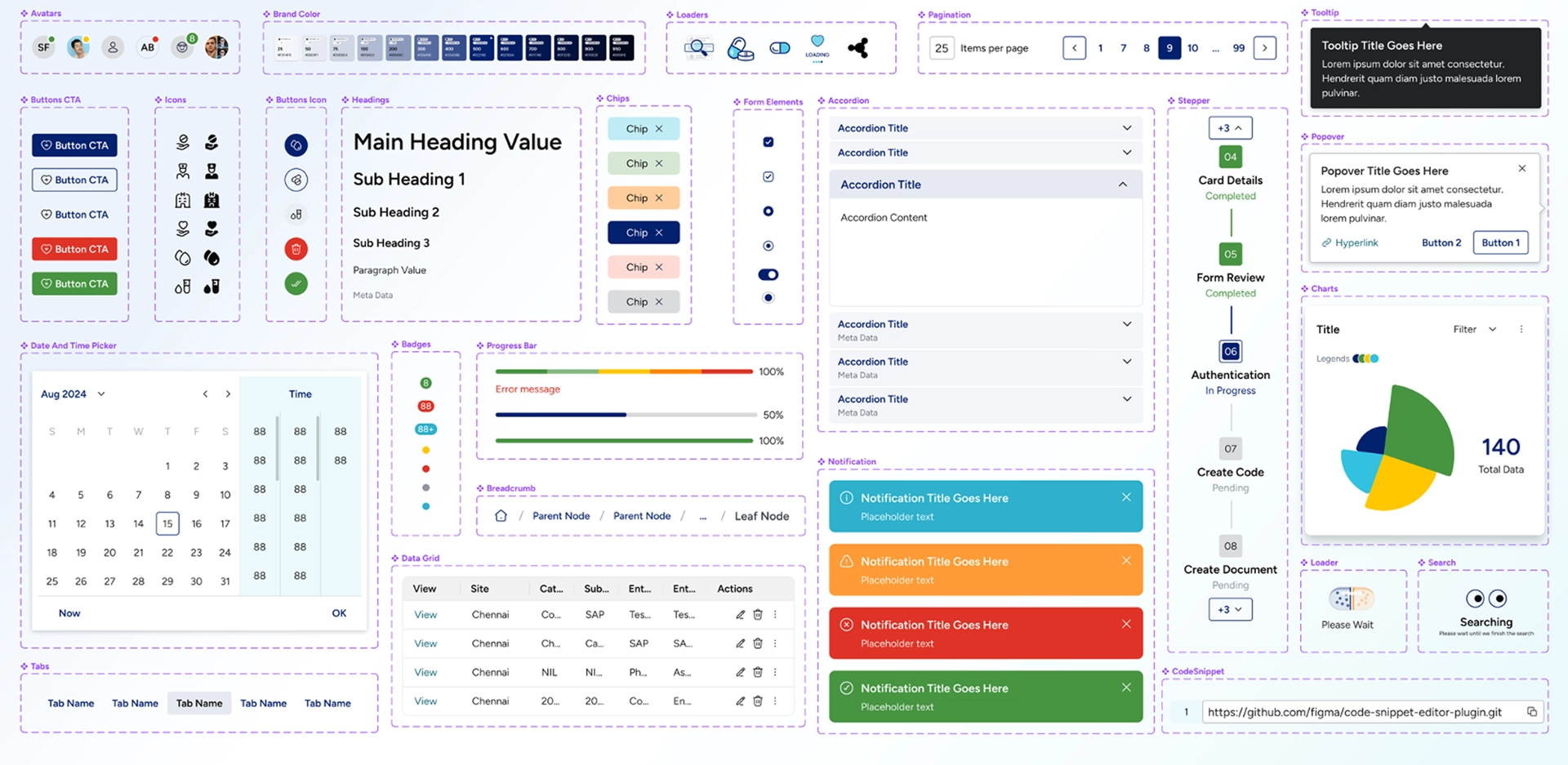
Thus we decided to make our design system into a comprehensive, scalable, and reusable UI framework designed to ensure consistency, efficiency, and accessibility across all ValGenesis applications. The aim was to provide a structured set of design elements, including foundations, components, and templates, to streamline product development and enhance user experience.

My Role

For this massive project, I served as a co-lead and core member of the design system steering committee, guiding the system from conception through organization-wide adoption. I’ve co-led strategy, structure, and integration of decisions across design and engineering, ensuring alignment with regulated pharma workflows.

Achievement

90% reduction in UI inconsistencies across products following system adoption

60% reduction in development cycle time due to component reuse & standardized templates

60% reduction in non-compliance risks by strictly adhering to industry standards

3x faster feature discovery post-rollout with governance and documentations

Design System Approach

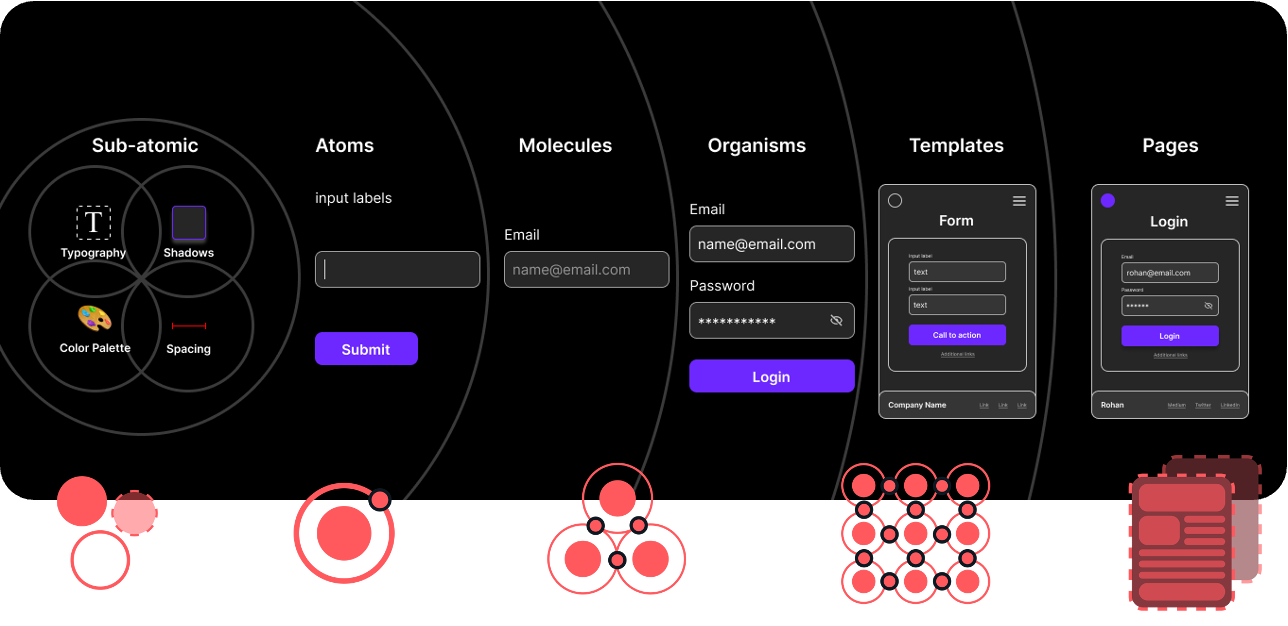
Proposed by Brad Frost, we decided to go with the Atomic Design approach which provides a structured approach in creating the design systems. It is inspired by chemistry, where matter is composed of fundamental building blocks called atoms. This analogy translates seamlessly into design, where the smallest UI elements combine to form larger, more complex structures.

Benefits of an Atomic Design System

Using this, we wanted to create a framework for our design system, that ensured consistency and adaptability across projects. This approach streamlines the design process and sets the foundation for a seamless, scalable, and future-proof product experience.

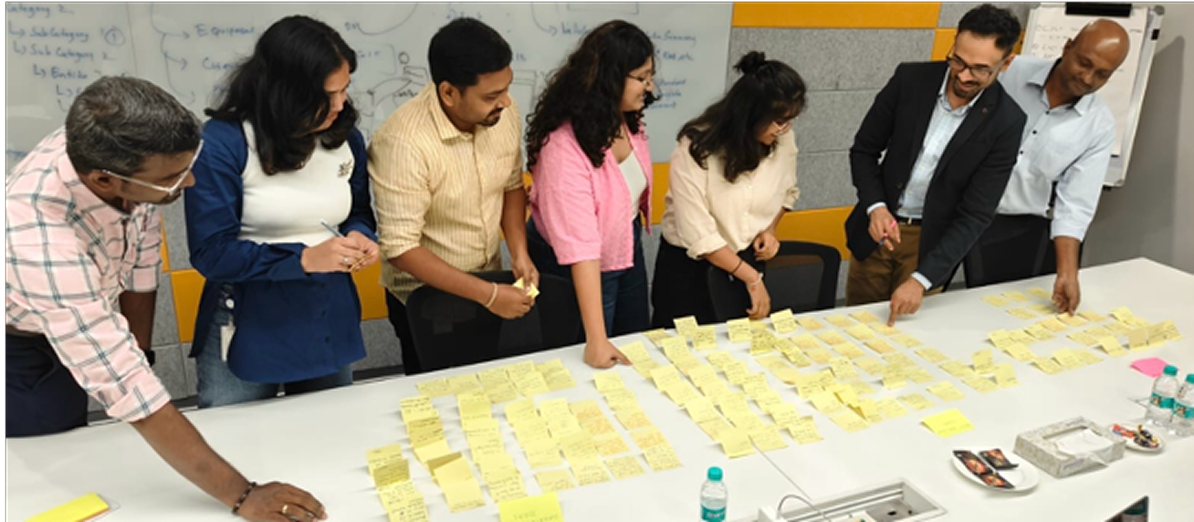
Reverse Brainstorming

Using this, we wanted to create a framework for our design system, that ensured consistency and adaptability across projects. This approach streamlines the design process and sets the foundation for a seamless, scalable, and future-proof product experience.

Mood Boards

From the previous exercises, we had a lot of abstract ideas and we need to turn that into tangible visual directions. That's where the mood boarding exercise comes in. The entire ideation process, brainstorming, and conceptualization of the PULSE Design System mood boarding were done collaboratively in FigJam. The space captures the journey from initial discussions to finalizing the design principles, visual language, and structural guidelines.

Naming the Design System

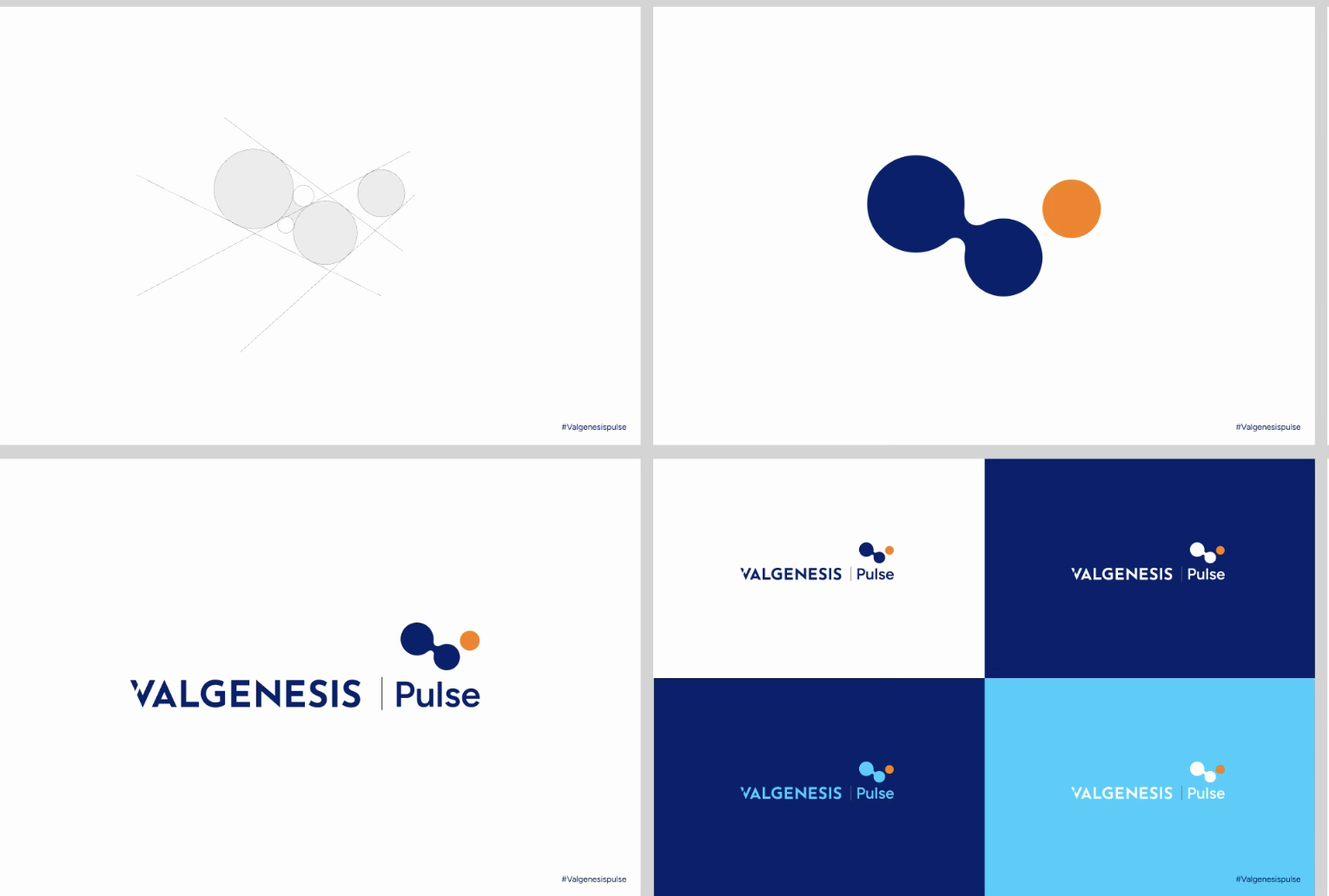
We wanted our design system to be the foundation for a seamless, efficient and scalable digital ecosystem, and to embody a forward-thinking approach that unites developers under a shared vision. Hence, we decided to name our design system as "PULSE - The Heartbeat of Design and Development".

Vitality and Energy

Represents the dynamic and lively nature of the design system

Lifeline

Highlights the essential support and guidance provided by the design

Consistency and Rhythm

Ensure a reliable and consistent framework for design processes

Responsiveness

Emphasizes system’s adaptability to user and market needs

Colors

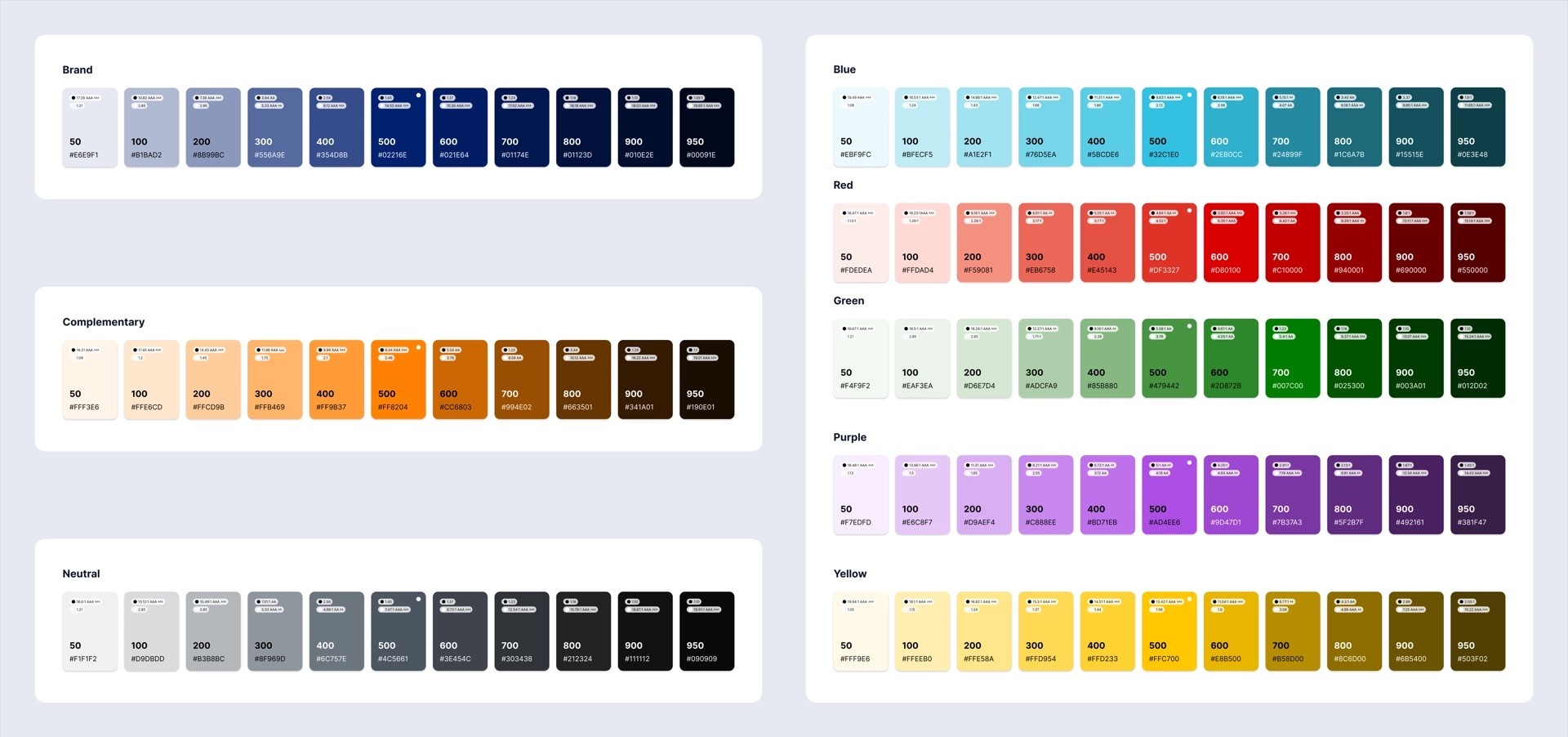
The ValGenesis PULSE Design System features a bold and accessible color scheme, in which every color has a function that strengthens the overall brand identity. The colors are inclusive for all users and adhere to WCAG 2.2 requirements, keeping accessibility at its core.

Typography

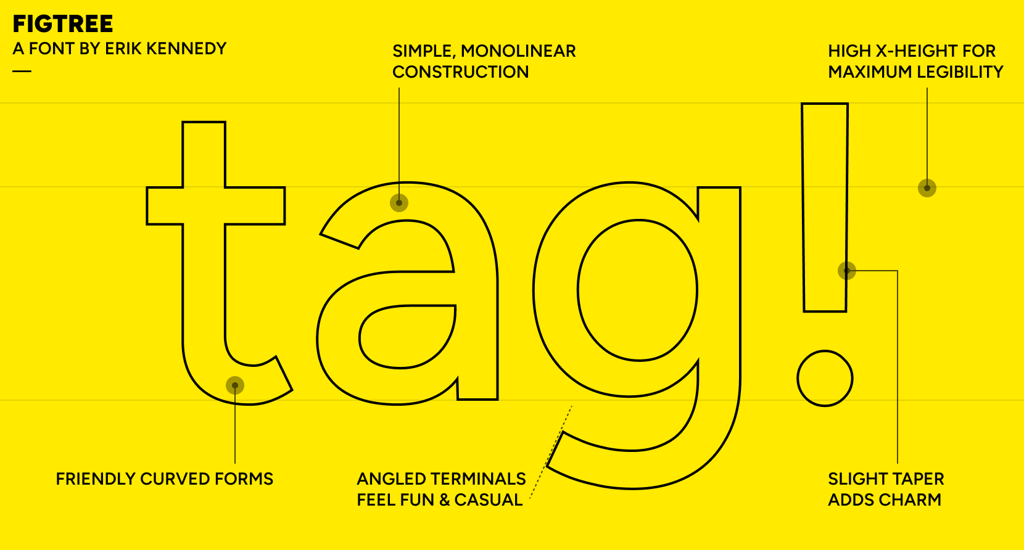
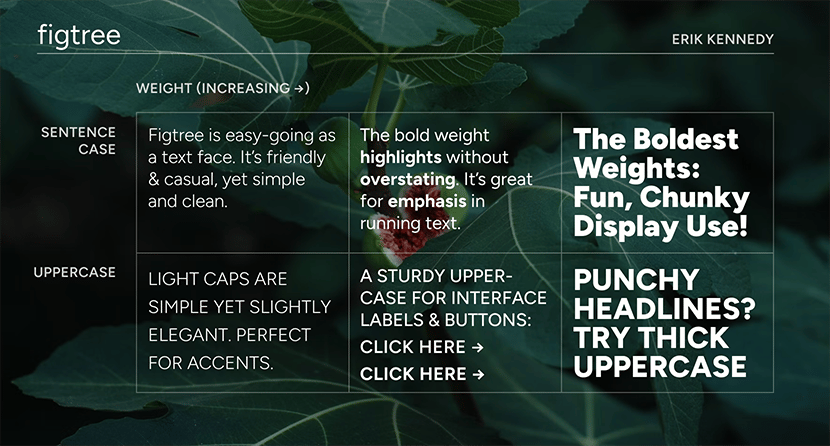
For the core font, we decided to go with FIGTREE - which is a clean yet friendly geometric sans serif font, designed for usage in web and mobile app. Figtree has the following advantages:

It's light-hearted and crisp when used for text, yet still retains some punch when used in uppercase – perfect for buttons and short labels.

The thicker weights have a distinctly friendlier character, great for headlines of more personable brands.

Icons

PULSE uses Hugeicons Pro icon library - a modern, pixel-perfect set of icons, carefully selected to match with our core themes.

Tokens

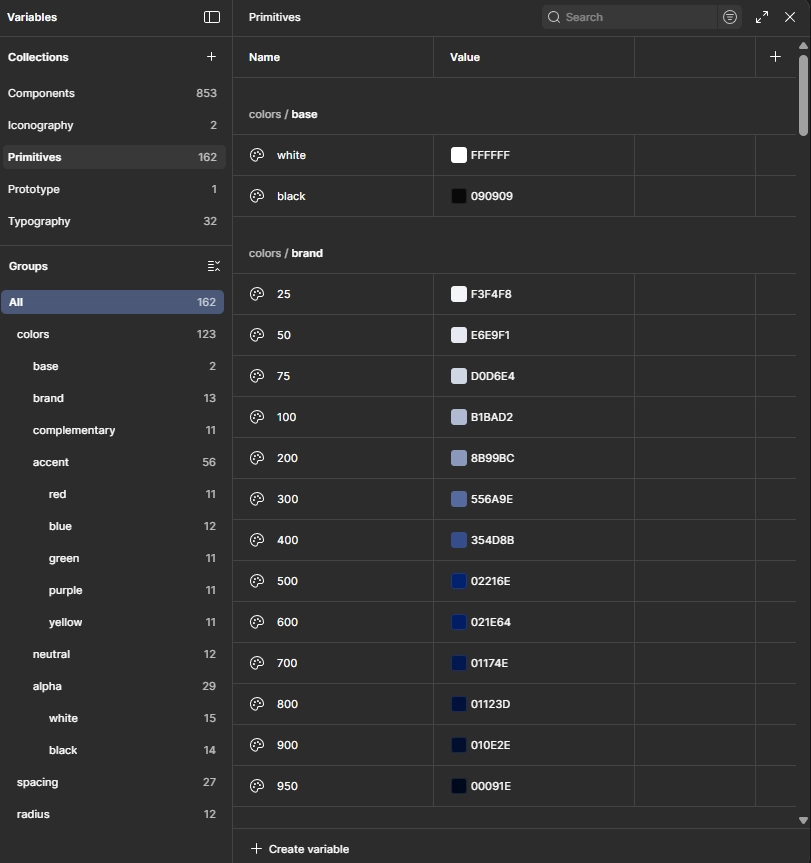
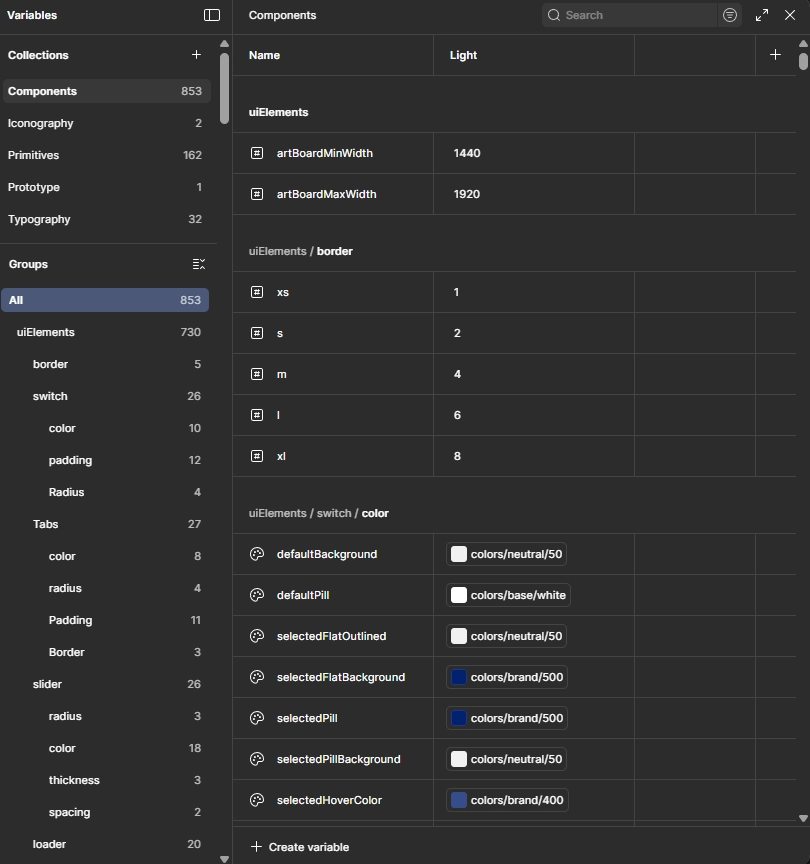
In order to bring clarity and structure to our design system, we introduced the concept of design tokens which helps us to take context aware decisions - ensuring the work stays aligned with ValGenesis’ brand identity.

Design Tokens are the single source of truth for values like color, spacing, typography, and more. They are platform-agnostic, meaning they're used both in Design and in code.

Because the design system needs to unify 5 different products, managing the design consistency across the platform is a daunting task. We realized that a normal token structure will not be sufficient enough to support the level of flexibility and scalability we are intending to achieve. That’s why we decided to go with a 2-tier token model.

Development Approach

While we were developing PULSE, we ran multiple workshops with engineering and R&D teams in parallel, to determine the optimal approach for developing PULSE. From these sessions, we identified 3 possible approaches, along with their pros and cons:

Approach 1 - Integrate an existing Design System (MUI) through source code modifications

PROs

  • We'll be able to modify the component to achieve the desired customization
  • Development effort will be relatively less when compared to Approach 3
  • Smaller team might be enough

CONs

  • It’ll be complex to merge the fixes and new releases made to the existing design system
  • We won’t be able to create Atom level components designed by Design Team
  • Code maintenance is not easy
  • Team needs ramp-up time to understand the codebase

Approach 2 - Install an existing Design System as a dependency and applying themes/styles on top of it

PROs

  • It’ll be easy to adopt to the fixes and new releases made to the existing design system
  • Consuming or Using the Design System in the existing applications will be easy
  • We can use already developed Design Language System(DLS)
  • Code maintenance will be relatively easy
  • Extensive testing of components is not required

CONs

  • We won’t be able to create all the variants
  • There will be a one-time effort to achieve all the variants and customizations provided by Design Team

Approach 3 - Developing the Design System from scratch

PROs

  • Straightforward to create Atom level components provided by Design Team
  • Full flexibility of code
  • Code maintenance will be easy
  • Easy to apply the customization

CONs

  • Development effort will be more
  • We might need a bigger team
  • Building complex components like DataGrid from the ground up can be a significant challenge. Utilizing third-party UI libraries/packages is a more feasible approach
  • Extensive or thorough testing is required
  • Engineering team will need to put more efforts to adopt to the new design system

Summary

After much deliberation and ideations within multiple teams across the organization, we chose a hybrid route - combine and customize (Material UI) MUI components, then layer PULSE styles and themes to deliver a unified visual identity while leveraging a mature, well-documented foundation.

The theming architecture is critical to scalability. We need an abstract layer - a "Design Kit" - that separates foundational styles (colors, typography, spacing) from component implementations, which aligns with our 2-tier design token model.

PULSE Adoption

Adoption matters because a design system delivers value only when it is actively used, embedded in workflows, and measured against product and business outcomes. In order for this to work, we came up with an adoption workflow that turns Pulse from a component library into a delivery pipeline, closing the loop from curation to shipped value.

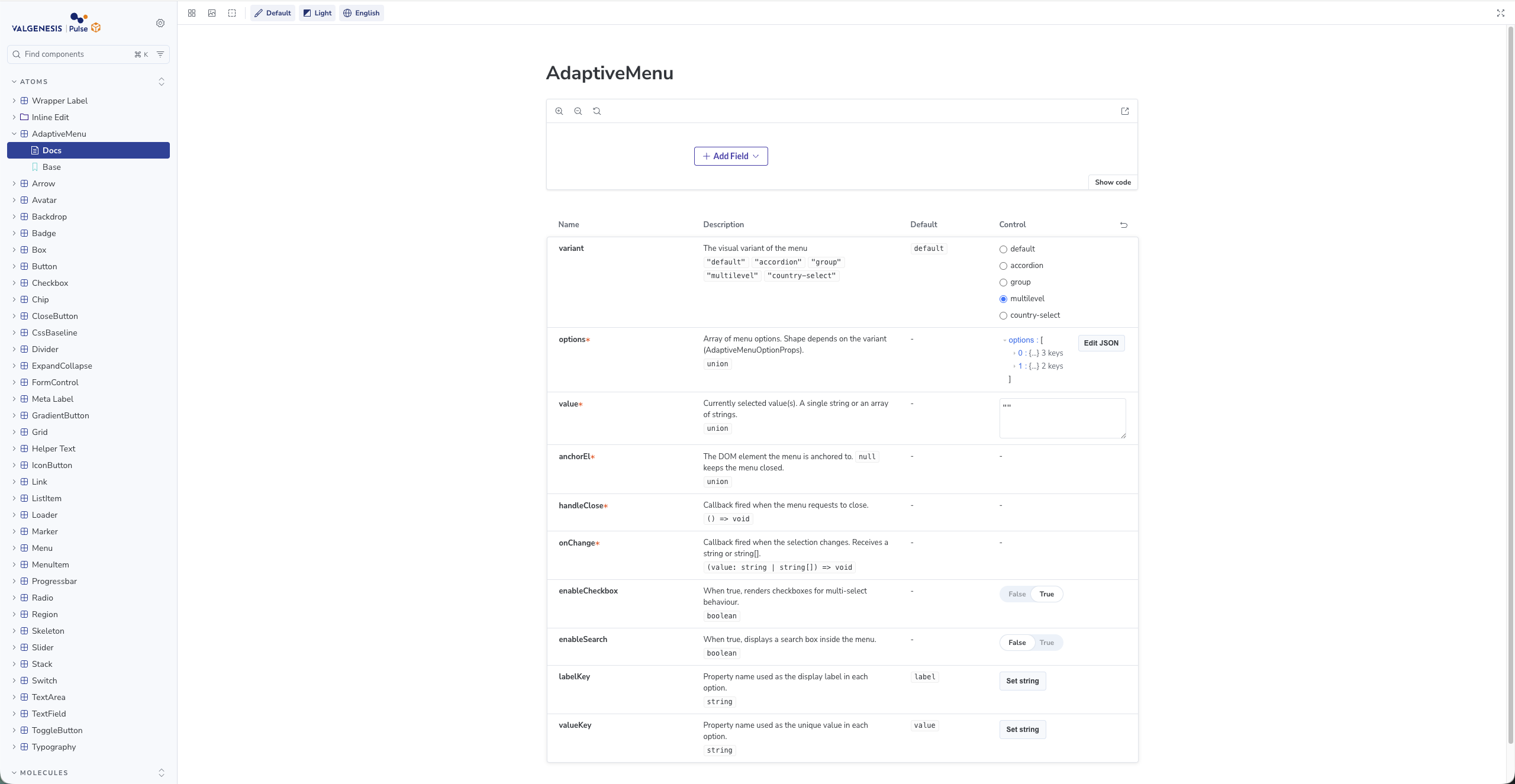
To ensure smooth building, testing and documentation of components, we decided to go with Storybook - an online workshop platform for building UI components and pages in isolation. This helped us to develop and share hard-to-reach states and edge cases without needing to run our whole app, ensuring smooth adoption.

Impact

After a year of ideation, cross-functional collaboration, and continuous customer engagement, we launched Phase 1 of our “PULSE” design system - driving strong internal satisfaction measured using internal NPS/CSAT scores, and reducing development time through improved efficiency and fewer bugs. We created significant impact within our organization, some of which are as follows:

50+ modular and scalable components produced, translated into 30+ product-ready templates adhering into WCAG 2.2 accessibility guidelines

3x faster feature delivery post-rollout with governance and documentation

Up to 60% reduction in development and testing cycles, and 90% reduction in UI consistencies following adoption

Achieved a 98% unit test coverage exceeding ISO Benchmark

Where Are We Right Now

The design system is still in progress, and constantly being iterated on. With PULSE adoption accelerating across teams, we're preparing the 2nd release of PULSE in the coming months, to deliver advanced components for complex life sciences workflows and expanded cross-functional support for platform-wide integration.

Next steps include deepening coverage across complex domain components, expanding usage guidelines, and maturing analytics for adoption and quality.

We Work Together

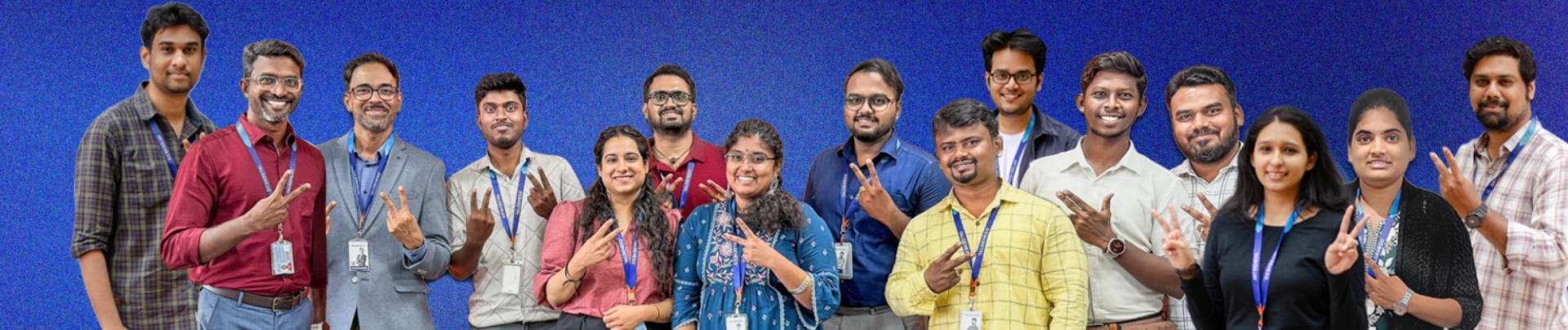
The project's success was made possible by the dedication and collaboration of numerous team members across design, engineering, and product. These learnings will inform my approach to future design initiatives and organizational design challenges.

Back

Logo

© 2026 Crafted by Nithy with

Logo

Back

Pulse Design System

From Complexity to Simplicity: Achieved 60% faster development and 3x product delivery with a robust, scalable design system.

My project hero

Establishing a unified design language and governance model across 5 enterprise products, resulted with an increase in product delivery by 3x, driving a 60% reduction in development cycle time and ensuring strict accessibility compliance across all applications.

Client

ValGenesis Pvt Ltd

My Role

Co-Lead

Year

2025

Project Scope

Web & Mobile App

Project Overview

As we at ValGenesis are moving forward towards developing a unified platform that provides end-to-end digital validation solution across the life sciences industry, myself along with the design team recognized the need for unifying our designs, This led us to come up with an enterprise level design system that acts as a single source of truth for all the teams across our organization.

The Problem

Currently, our life sciences portfolio consists of five products developed on disparate design patterns and technical stacks. This fragmented ecosystem creates significant friction, as customers must treat each product as a standalone implementation. This inconsistency inflates the total cost of ownership, extends rollout timelines, and discourages cross-platform investment. To pinpoint the structural drivers of these inefficiencies, the design team conducted an internal organizational survey and stakeholder interviews, revealing several key root causes.

The lack of a unified framework forces engineering teams to recreate identical components and fixes in isolation. This duplication of effort creates a heavy maintenance burden and complicates the codebase, ultimately decelerating our shipping velocity.

Inconsistent design standards have forced Product and UX teams into a cycle of continuous rework and manual alignment. Without a unified foundation, we are unable to implement a scalable design system, leading to redundant efforts rather than cross-product efficiency.

Fragmented product architectures have led to prohibitive support and training costs. Professional Services and Solutions Engineering cannot standardize their workflows, resulting in inefficient onboarding and a high dependency on product-specific expertise.

Business Goal

Since we had a lot of legacy products with inconsistent designs and fragmented tech stacks that delivered a poor, disjointed user experience, the need for coming up with a design system was even more imminent.

Thus we decided to make our design system into a comprehensive, scalable, and reusable UI framework designed to ensure consistency, efficiency, and accessibility across all ValGenesis applications. The aim was to provide a structured set of design elements, including foundations, components, and templates, to streamline product development and enhance user experience.

My Role

For this massive project, I served as a co-lead and core member of the design system steering committee, guiding the system from conception through organization-wide adoption. I’ve co-led strategy, structure, and integration of decisions across design and engineering, ensuring alignment with regulated pharma workflows.

Achievement

90% reduction in UI inconsistencies across products following system adoption

60% reduction in development cycle time due to component reuse & standardized templates

60% reduction in non-compliance risks by strictly adhering to industry standards

3x faster feature discovery post-rollout with governance and documentations

Design System Approach

Proposed by Brad Frost, we decided to go with the Atomic Design approach which provides a structured approach in creating the design systems. It is inspired by chemistry, where matter is composed of fundamental building blocks called atoms. This analogy translates seamlessly into design, where the smallest UI elements combine to form larger, more complex structures.

Benefits of an Atomic Design System

Using this, we wanted to create a framework for our design system, that ensured consistency and adaptability across projects. This approach streamlines the design process and sets the foundation for a seamless, scalable, and future-proof product experience.

Brings design

culture into the

organization

Improves

projects

governance

Considerably

improves UX

maturity

Improves

customer

satisfaction

Helps to

beat the

competition

Reverse Brainstorming

Using this, we wanted to create a framework for our design system, that ensured consistency and adaptability across projects. This approach streamlines the design process and sets the foundation for a seamless, scalable, and future-proof product experience.

Mood Boards

From the previous exercises, we had a lot of abstract ideas and we need to turn that into tangible visual directions. That's where the mood boarding exercise comes in. The entire ideation process, brainstorming, and conceptualization of the PULSE Design System mood boarding were done collaboratively in FigJam. The space captures the journey from initial discussions to finalizing the design principles, visual language, and structural guidelines.

Naming the Design System

We wanted our design system to be the foundation for a seamless, efficient and scalable digital ecosystem, and to embody a forward-thinking approach that unites developers under a shared vision. Hence, we decided to name our design system as "PULSE - The Heartbeat of Design and Development".

Vitality and Energy

Represents the dynamic and lively nature of the design system

Lifeline

Highlights the essential support and guidance provided by the design

Consistency and Rhythm

Ensure a reliable and consistent framework for design processes

Responsiveness

Emphasizes system’s adaptability to user and market needs

Colors

The ValGenesis PULSE Design System features a bold and accessible color scheme, in which every color has a function that strengthens the overall brand identity. The colors are inclusive for all users and adhere to WCAG 2.2 requirements, keeping accessibility at its core.

Typography

For the core font, we decided to go with FIGTREE - which is a clean yet friendly geometric sans serif font, designed for usage in web and mobile app. Figtree has the following advantages:

It's light-hearted and crisp when used for text, yet still retains some punch when used in uppercase – perfect for buttons and short labels.

The thicker weights have a distinctly friendlier character, great for headlines of more personable brands.

Icons

PULSE uses Hugeicons Pro icon library - a modern, pixel-perfect set of icons, carefully selected to match with our core themes.

Tokens

In order to bring clarity and structure to our design system, we introduced the concept of design tokens which helps us to take context aware decisions - ensuring the work stays aligned with ValGenesis’ brand identity.

Design Tokens are the single source of truth for values like color, spacing, typography, and more. They are platform-agnostic, meaning they're used both in Design and in code.

Because the design system needs to unify 5 different products, managing the design consistency across the platform is a daunting task. We realized that a normal token structure will not be sufficient enough to support the level of flexibility and scalability we are intending to achieve. That’s why we decided to go with a 2-tier token model.

Development Approach

While we were developing PULSE, we ran multiple workshops with engineering and R&D teams in parallel, to determine the optimal approach for developing PULSE. From these sessions, we identified 3 possible approaches, along with their pros and cons:

Approach 1 - Integrate an existing Design System (MUI) through source code modifications

PROs

  • We'll be able to modify the component to achieve the desired customization
  • Development effort will be relatively less when compared to Approach 3
  • Smaller team might be enough

CONs

  • It’ll be complex to merge the fixes and new releases made to the existing design system
  • We won’t be able to create Atom level components designed by Design Team
  • Code maintenance is not easy
  • Team needs ramp-up time to understand the codebase

Approach 2 - Install an existing Design System as a dependency and applying themes/styles on top of it

PROs

  • It’ll be easy to adopt to the fixes and new releases made to the existing design system
  • Consuming or Using the Design System in the existing applications will be easy
  • We can use already developed Design Language System(DLS)
  • Code maintenance will be relatively easy
  • Extensive testing of components is not required

CONs

  • We won’t be able to create all the variants
  • There will be a one-time effort to achieve all the variants and customizations provided by Design Team

Approach 3 - Developing the Design System from scratch

PROs

  • Straightforward to create Atom level components provided by Design Team
  • Full flexibility of code
  • Code maintenance will be easy
  • Easy to apply the customization

CONs

  • Development effort will be more
  • We might need a bigger team
  • Building complex components like DataGrid from the ground up can be a significant challenge. Utilizing third-party UI libraries/packages is a more feasible approach
  • Extensive or thorough testing is required
  • Engineering team will need to put more efforts to adopt to the new design system

Summary

After much deliberation and ideations within multiple teams across the organization, we chose a hybrid route - combine and customize (Material UI) MUI components, then layer PULSE styles and themes to deliver a unified visual identity while leveraging a mature, well-documented foundation.

The theming architecture is critical to scalability. We need an abstract layer - a "Design Kit" - that separates foundational styles (colors, typography, spacing) from component implementations, which aligns with our 2-tier design token model.

PULSE Adoption

Adoption matters because a design system delivers value only when it is actively used, embedded in workflows, and measured against product and business outcomes. In order for this to work, we came up with an adoption workflow that turns Pulse from a component library into a delivery pipeline, closing the loop from curation to shipped value.

To ensure smooth building, testing and documentation of components, we decided to go with Storybook - an online workshop platform for building UI components and pages in isolation. This helped us to develop and share hard-to-reach states and edge cases without needing to run our whole app, ensuring smooth adoption.

Impact

After a year of ideation, cross-functional collaboration, and continuous customer engagement, we launched Phase 1 of our “PULSE” design system - driving strong internal satisfaction measured using internal NPS/CSAT scores, and reducing development time through improved efficiency and fewer bugs. We created significant impact within our organization, some of which are as follows:

50+ modular and scalable components produced, translated into 30+ product-ready templates adhering into WCAG 2.2 accessibility guidelines

3x faster feature delivery post-rollout with governance and documentation

Up to 60% reduction in development and testing cycles, and 90% reduction in UI consistencies following adoption

Achieved a 98% unit test coverage exceeding ISO Benchmark

Where Are We Right Now

The design system is still in progress, and constantly being iterated on. With PULSE adoption accelerating across teams, we're preparing the 2nd release of PULSE in the coming months, to deliver advanced components for complex life sciences workflows and expanded cross-functional support for platform-wide integration.

Next steps include deepening coverage across complex domain components, expanding usage guidelines, and maturing analytics for adoption and quality.

We Work Together

The project's success was made possible by the dedication and collaboration of numerous team members across design, engineering, and product. These learnings will inform my approach to future design initiatives and organizational design challenges.

Back

Logo

© 2026 Nithy Design. Crafted by Nithy with

Logo

Back

Pulse Design System

From Complexity to Simplicity: Achieved 60% faster development and 3x product delivery with a robust, scalable design system.

My project hero

Establishing a unified design language and governance model across 5 enterprise products, resulted with an increase in product delivery by 3x, driving a 60% reduction in development cycle time and ensuring strict accessibility compliance across all applications.

Client

ValGenesis Pvt Ltd

My Role

Co-Lead

Year

2025

Project Scope

Web & Mobile App
Project Overview

As we at ValGenesis are moving forward towards developing a unified platform that provides end-to-end digital validation solution across the life sciences industry, myself along with the design team recognized the need for unifying our designs, This led us to come up with an enterprise level design system that acts as a single source of truth for all the teams across our organization.

The Problem

Currently, our life sciences portfolio consists of five products developed on disparate design patterns and technical stacks. This fragmented ecosystem creates significant friction, as customers must treat each product as a standalone implementation. This inconsistency inflates the total cost of ownership, extends rollout timelines, and discourages cross-platform investment. To pinpoint the structural drivers of these inefficiencies, the design team conducted an internal organizational survey and stakeholder interviews, revealing several key root causes.

The lack of a unified framework forces engineering teams to recreate identical components and fixes in isolation. This duplication of effort creates a heavy maintenance burden and complicates the codebase, ultimately decelerating our shipping velocity.

Inconsistent design standards have forced Product and UX teams into a cycle of continuous rework and manual alignment. Without a unified foundation, we are unable to implement a scalable design system, leading to redundant efforts rather than cross-product efficiency.

Fragmented product architectures have led to prohibitive support and training costs. Professional Services and Solutions Engineering cannot standardize their workflows, resulting in inefficient onboarding and a high dependency on product-specific expertise.

Business Goal

Since we had a lot of legacy products with inconsistent designs and fragmented tech stacks that delivered a poor, disjointed user experience, the need for coming up with a design system was even more imminent.

Thus we decided to make our design system into a comprehensive, scalable, and reusable UI framework designed to ensure consistency, efficiency, and accessibility across all ValGenesis applications. The aim was to provide a structured set of design elements, including foundations, components, and templates, to streamline product development and enhance user experience.

My Role

For this massive project, I served as a co-lead and core member of the design system steering committee, guiding the system from conception through organization-wide adoption. I’ve co-led strategy, structure, and integration of decisions across design and engineering, ensuring alignment with regulated pharma workflows.

Achievement

90% reduction in UI inconsistencies across products following system adoption

60% reduction in development cycle time due to component reuse & standardized templates

60% reduction in non-compliance risks by strictly adhering to industry standards

3x faster feature discovery post-rollout with governance and documentations

Design System Approach

Proposed by Brad Frost, we decided to go with the Atomic Design approach which provides a structured approach in creating the design systems. It is inspired by chemistry, where matter is composed of fundamental building blocks called atoms. This analogy translates seamlessly into design, where the smallest UI elements combine to form larger, more complex structures.

Benefits of an Atomic Design System

Using this, we wanted to create a framework for our design system, that ensured consistency and adaptability across projects. This approach streamlines the design process and sets the foundation for a seamless, scalable, and future-proof product experience.

Brings design

culture into the

organization

Improves

projects

governance

Considerably

improves UX

maturity

Improves

customer

satisfaction

Helps to

beat the

competition

Reverse Brainstorming

Using this, we wanted to create a framework for our design system, that ensured consistency and adaptability across projects. This approach streamlines the design process and sets the foundation for a seamless, scalable, and future-proof product experience.

Mood Boards

From the previous exercises, we had a lot of abstract ideas and we need to turn that into tangible visual directions. That's where the mood boarding exercise comes in. The entire ideation process, brainstorming, and conceptualization of the PULSE Design System mood boarding were done collaboratively in FigJam. The space captures the journey from initial discussions to finalizing the design principles, visual language, and structural guidelines.

Naming the Design System

We wanted our design system to be the foundation for a seamless, efficient and scalable digital ecosystem, and to embody a forward-thinking approach that unites developers under a shared vision. Hence, we decided to name our design system as "PULSE - The Heartbeat of Design and Development".

Vitality and Energy

Represents the dynamic and lively nature of the design system

Lifeline

Highlights the essential support and guidance provided by the design

Consistency and Rhythm

Ensure a reliable and consistent framework for design processes

Responsiveness

Emphasizes system’s adaptability to user and market needs

Colors

The ValGenesis PULSE Design System features a bold and accessible color scheme, in which every color has a function that strengthens the overall brand identity. The colors are inclusive for all users and adhere to WCAG 2.2 requirements, keeping accessibility at its core.

Typography

For the core font, we decided to go with FIGTREE - which is a clean yet friendly geometric sans serif font, designed for usage in web and mobile app. Figtree has the following advantages:

It's light-hearted and crisp when used for text, yet still retains some punch when used in uppercase – perfect for buttons and short labels.

The thicker weights have a distinctly friendlier character, great for headlines of more personable brands.

Icons

PULSE uses Hugeicons Pro icon library - a modern, pixel-perfect set of icons, carefully selected to match with our core themes.

Tokens

In order to bring clarity and structure to our design system, we introduced the concept of design tokens which helps us to take context aware decisions - ensuring the work stays aligned with ValGenesis’ brand identity.

Design Tokens are the single source of truth for values like color, spacing, typography, and more. They are platform-agnostic, meaning they're used both in Design and in code.

Because the design system needs to unify 5 different products, managing the design consistency across the platform is a daunting task. We realized that a normal token structure will not be sufficient enough to support the level of flexibility and scalability we are intending to achieve. That’s why we decided to go with a 2-tier token model.

Development Approach

While we were developing PULSE, we ran multiple workshops with engineering and R&D teams in parallel, to determine the optimal approach for developing PULSE. From these sessions, we identified 3 possible approaches, along with their pros and cons:

Approach 1 - Integrate an existing Design System (MUI) through source code modifications

PROs

  • We'll be able to modify the component to achieve the desired customization
  • Development effort will be relatively less when compared to Approach 3
  • Smaller team might be enough

CONs

  • It’ll be complex to merge the fixes and new releases made to the existing design system
  • We won’t be able to create Atom level components designed by Design Team
  • Code maintenance is not easy
  • Team needs ramp-up time to understand the codebase

Approach 2 - Install an existing Design System as a dependency and applying themes/styles on top of it

PROs

  • It’ll be easy to adopt to the fixes and new releases made to the existing design system
  • Consuming or Using the Design System in the existing applications will be easy
  • We can use already developed Design Language System(DLS)
  • Code maintenance will be relatively easy
  • Extensive testing of components is not required

CONs

  • We won’t be able to create all the variants
  • There will be a one-time effort to achieve all the variants and customizations provided by Design Team

Approach 3 - Developing the Design System from scratch

PROs

  • Straightforward to create Atom level components provided by Design Team
  • Full flexibility of code
  • Code maintenance will be easy
  • Easy to apply the customization

CONs

  • Development effort will be more
  • We might need a bigger team
  • Building complex components like DataGrid from the ground up can be a significant challenge. Utilizing third-party UI libraries/packages is a more feasible approach
  • Extensive or thorough testing is required
  • Engineering team will need to put more efforts to adopt to the new design system

Summary

After much deliberation and ideations within multiple teams across the organization, we chose a hybrid route - combine and customize (Material UI) MUI components, then layer PULSE styles and themes to deliver a unified visual identity while leveraging a mature, well-documented foundation.

The theming architecture is critical to scalability. We need an abstract layer - a "Design Kit" - that separates foundational styles (colors, typography, spacing) from component implementations, which aligns with our 2-tier design token model.

PULSE Adoption

Adoption matters because a design system delivers value only when it is actively used, embedded in workflows, and measured against product and business outcomes. In order for this to work, we came up with an adoption workflow that turns Pulse from a component library into a delivery pipeline, closing the loop from curation to shipped value.

To ensure smooth building, testing and documentation of components, we decided to go with Storybook - an online workshop platform for building UI components and pages in isolation. This helped us to develop and share hard-to-reach states and edge cases without needing to run our whole app, ensuring smooth adoption.

Impact

After a year of ideation, cross-functional collaboration, and continuous customer engagement, we launched Phase 1 of our “PULSE” design system - driving strong internal satisfaction measured using internal NPS/CSAT scores, and reducing development time through improved efficiency and fewer bugs. We created significant impact within our organization, some of which are as follows:

50+ modular and scalable components produced, translated into 30+ product-ready templates adhering into WCAG 2.2 accessibility guidelines

3x faster feature delivery post-rollout with governance and documentation

Up to 60% reduction in development and testing cycles, and 90% reduction in UI consistencies following adoption

Achieved a 98% unit test coverage exceeding ISO Benchmark

Where Are We Right Now

The design system is still in progress, and constantly being iterated on. With PULSE adoption accelerating across teams, we're preparing the 2nd release of PULSE in the coming months, to deliver advanced components for complex life sciences workflows and expanded cross-functional support for platform-wide integration.

Next steps include deepening coverage across complex domain components, expanding usage guidelines, and maturing analytics for adoption and quality.

We Work Together

The project's success was made possible by the dedication and collaboration of numerous team members across design, engineering, and product. These learnings will inform my approach to future design initiatives and organizational design challenges.

Back