Client
ValGenesis Pvt Ltd
My Role
UX Designer & Design Lead
Year
2025
Project Scope
Web & Mobile App


Back
A full UX redesign of ValGenesis Smart GxP's Workflow creation — transforming a legacy, constrained tool into a modern, scalable configuration platform for pharmaceutical compliance workflows
Client
ValGenesis Pvt Ltd
My Role
UX Designer & Design Lead
Year
2025
Project Scope
Web & Mobile App
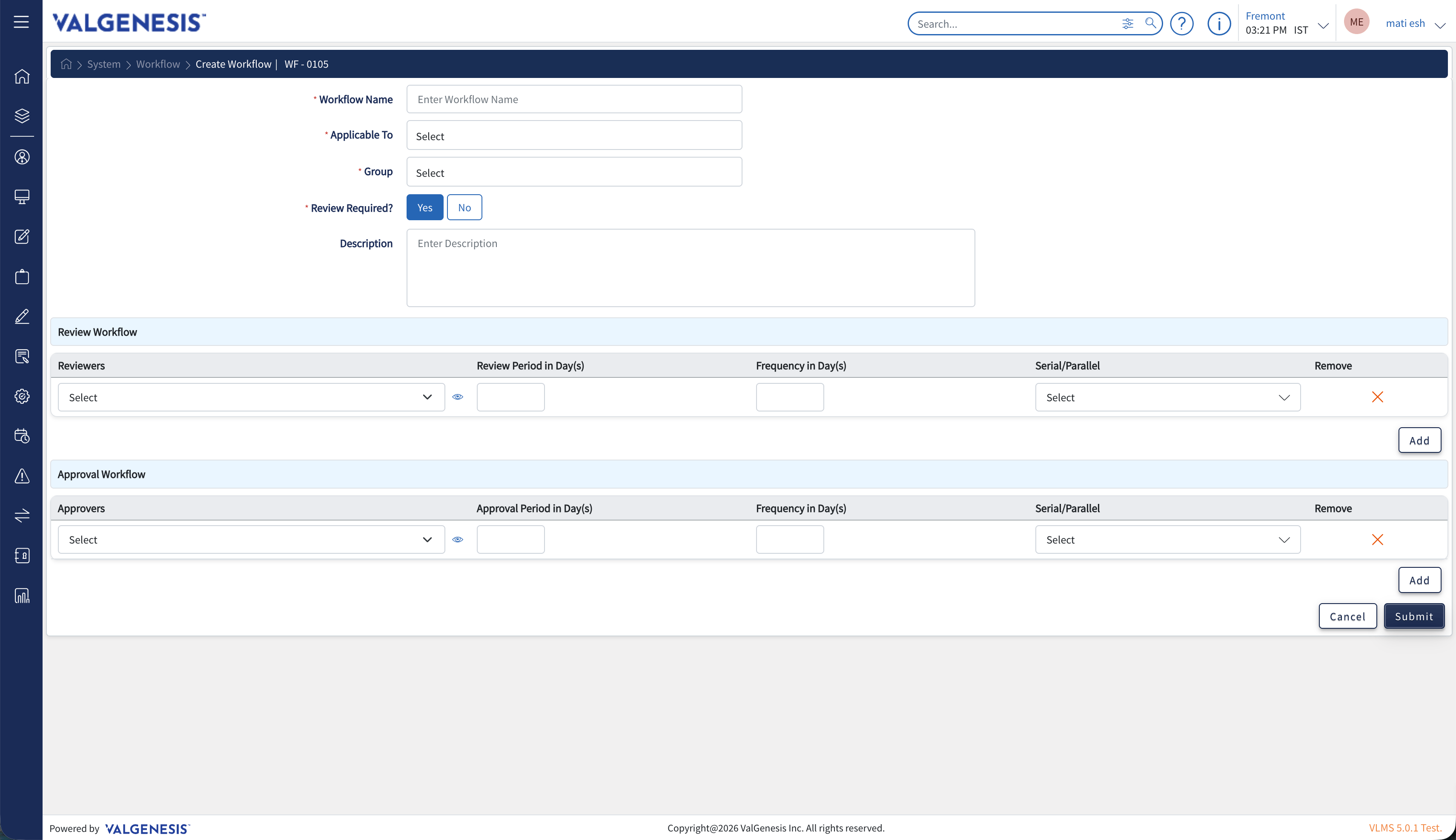
The existing form builder had several critical issues rooted in technical debt and outdated UX patterns — creating friction for administrator working in high-stakes pharmaceutical environments.
Technical Debt
Legacy frameworks and rigid components prevented the implementation of modern UX patterns.
Fragmented Configuration
Non-intuitive settings forced users to navigate multiple interfaces, making it impossible to complete a workflow setup in a single session.
Inefficient User Management
Modifying user roles was a multi-step process hampered by a lack of customization and flexibility.
Research drove every design decision — from stakeholder alignment to validating interaction patterns with real users
For this massive project, I served as a co-lead and core member of the design system steering committee, guiding the system from conception through organization-wide adoption. I’ve co-led strategy, structure, and integration of decisions across design and engineering, ensuring alignment with regulated pharma workflows.
Understand business requirements, technical constraints, and compliance needs to inform design decisions
Design Impact: Introduced modular component architecture
Design Impact: Created a configurable properties panel
Design Impact: Designed for future field type scalability
Design Impact: Removed the Grid based control system
Design Impact: Introduced canvas based editor
Consolidated settings into one properties panel

Steve Jones
System Admin
Pharmaceutical Manufacturing | 10 years in compliance system
⭐️
⭐️
⭐️

Swathi
Validation Engineer
Life Sciences | 5+ years in validation documentation
⭐️
⭐️
⭐️
No clear indication of selected user in the workflow
Clear selection states with visual indication
Serial and Parallel workflow is not visually conveyed
Clear visual indication for configured workflow
Unable to duplicate and change the workflow
Easily duplicate the review & approval workflow when it is required
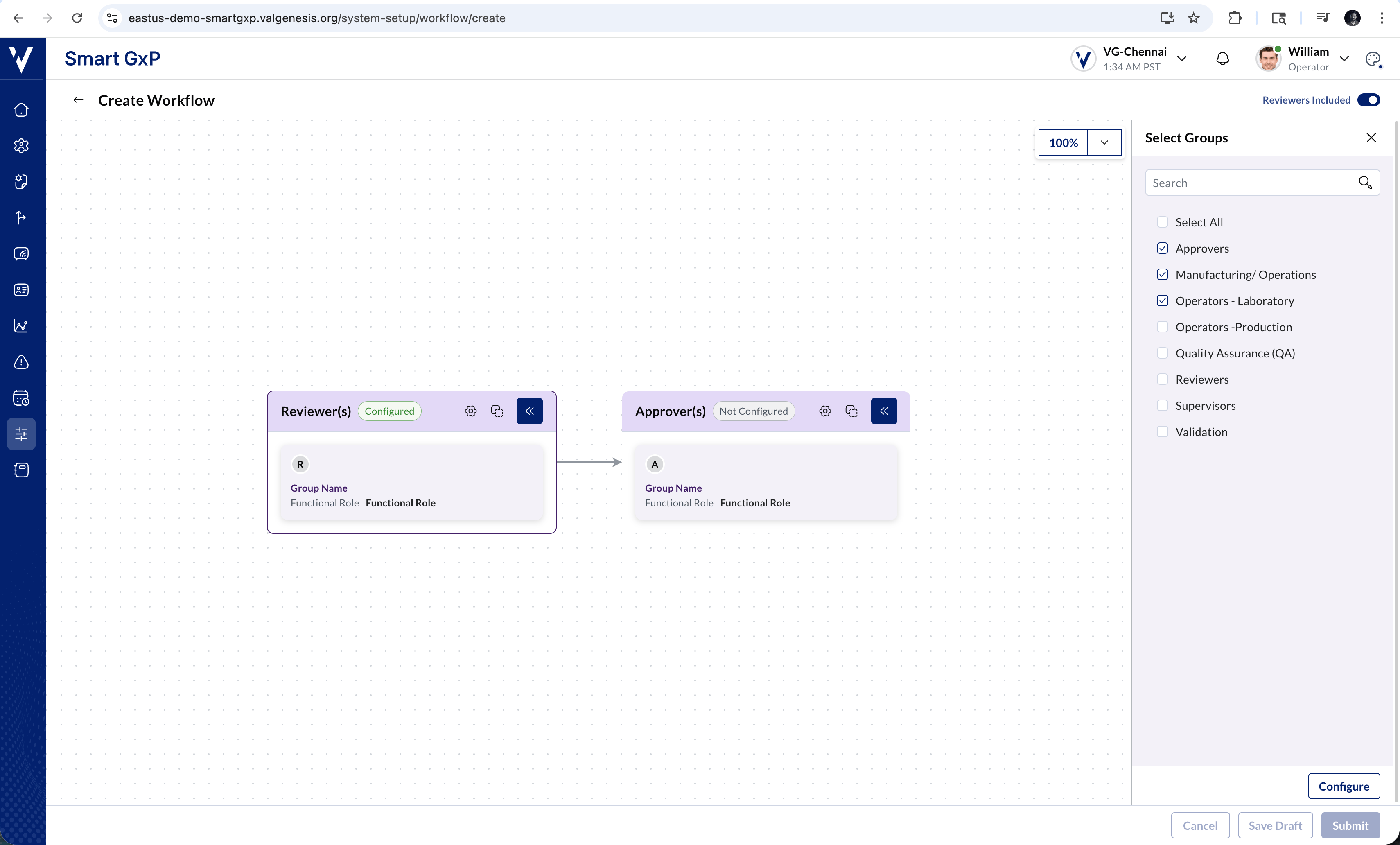
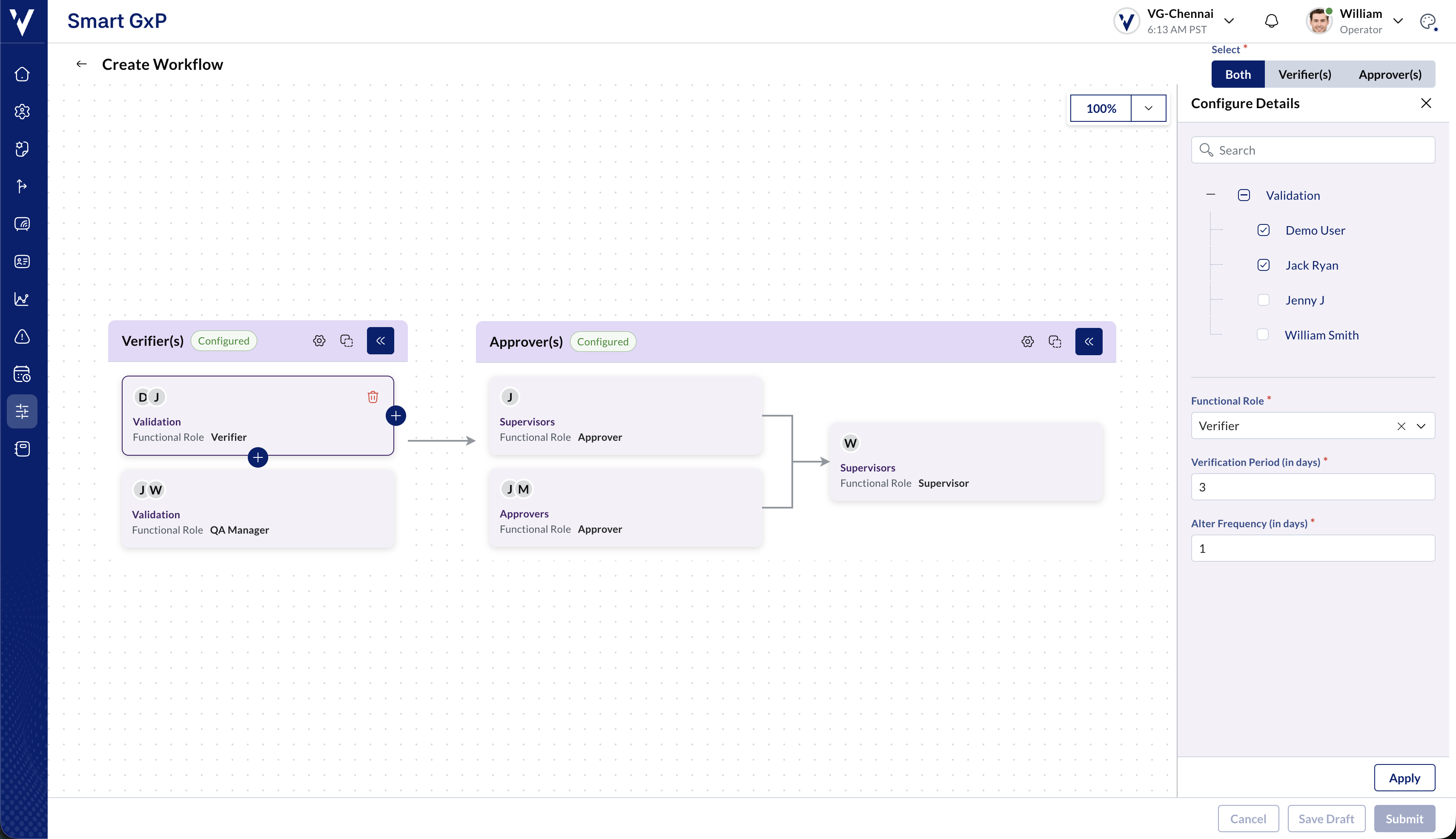
Consolidated complex, multi-level workflows into a simplified two-step progression housed in a single intuitive interface.

Dedicated panel add, modify the user for the workflow

Easy to configure the workflow based on the requirement

Adding Serial and Parallel workflow made easy

Intuitive canvas based workflow creation in the platform
The legacy workflow creation used grid based, non-scalable components. The redesign aligned fully with the newly introduced ValGenesis design system PULSE — enabling consistency, faster development, and future scalability.
Reusable building blocks across the entire platform
Engineers build new features without recreating UI elements
Component-driven builder makes adding new field types easy
The redesigned workflow creation delivered tangible improvements across efficiency, adoption, scalability, and platform consistency
Back
A full UX redesign of ValGenesis Smart GxP's Workflow creation — transforming a legacy, constrained tool into a modern, scalable configuration platform for pharmaceutical compliance workflows
Client
ValGenesis Pvt Ltd
My Role
UX Designer & Design Lead
Year
2025
Project Scope
Web & Mobile App
The existing form builder had several critical issues rooted in technical debt and outdated UX patterns creating friction for administrator working in high-stakes pharmaceutical environments.
Technical Debt
Legacy frameworks and rigid components prevented the implementation of modern UX patterns.
Fragmented Configuration
Non-intuitive settings forced users to navigate multiple interfaces, making it impossible to complete a workflow setup in a single session.
Inefficient User Management
Modifying user roles was a multi-step process hampered by a lack of customization and flexibility.
Research drove every design decision — from stakeholder alignment to validating interaction patterns with real users
For this massive project, I served as a co-lead and core member of the design system steering committee, guiding the system from conception through organization-wide adoption. I’ve co-led strategy, structure, and integration of decisions across design and engineering, ensuring alignment with regulated pharma workflows.
Understand business requirements, technical constraints, and compliance needs to inform design decisions
Design Impact: Introduced modular component architecture
Design Impact: Created a configurable properties panel
Design Impact: Designed for future field type scalability
Design Impact: Removed the Grid based control system
Design Impact: Introduced canvas based editor
Consolidated settings into one properties panel

Steve Jones
System Admin
Pharmaceutical Manufacturing | 10 years in compliance system
⭐️
⭐️
⭐️

Swathi
Validation Engineer
Life Sciences | 5+ years in validation documentation
⭐️
⭐️
⭐️
No clear indication of selected user in the workflow
Clear selection states with visual indication
Serial and Parallel workflow is not visually conveyed
Clear visual indication for configured workflow
Unable to duplicate and change the workflow
Easily duplicate the review & approval workflow when it is required
Consolidated complex, multi-level workflows into a simplified two-step progression housed in a single intuitive interface.
Dedicated panel add, modify the user for the workflow
Easy to configure the workflow based on the requirement
Adding Serial and Parallel workflow made easy

Intuitive canvas based workflow creation in the platform
The legacy workflow creation used grid based, non-scalable components. The redesign aligned fully with the newly introduced ValGenesis design system PULSE — enabling consistency, faster development, and future scalability.
Reusable building blocks across the entire platform
Engineers build new features without recreating UI elements
Component-driven builder makes adding new field types easy
The redesigned workflow creation delivered tangible improvements across efficiency, adoption, scalability, and platform consistency
Back
A full UX redesign of ValGenesis Smart GxP's Workflow creation — transforming a legacy, constrained tool into a modern, scalable configuration platform for pharmaceutical compliance workflows
Client
ValGenesis Pvt Ltd
My Role
UX Designer & Design Lead
Year
2025
Project Scope
Web & Mobile App
The existing workflow creation had several critical issues rooted in technical debt and outdated UX patterns — creating friction for administrator working in high-stakes pharmaceutical environments.
Technical Debt
Legacy frameworks and rigid components prevented the implementation of modern UX patterns.
Fragmented Configuration
Non-intuitive settings forced users to navigate multiple interfaces, making it impossible to complete a workflow setup in a single session.
Inefficient User Management
Modifying user roles was a multi-step process hampered by a lack of customization and flexibility.
Research drove every design decision — from stakeholder alignment to validating interaction patterns with real users
For this massive project, I served as a co-lead and core member of the design system steering committee, guiding the system from conception through organization-wide adoption. I’ve co-led strategy, structure, and integration of decisions across design and engineering, ensuring alignment with regulated pharma workflows.
Understand business requirements, technical constraints, and compliance needs to inform design decisions
Design Impact: Introduced modular component architecture
Design Impact: Created a configurable properties panel
Design Impact: Designed for future workflow scalability
Design Impact: Introduced canvas based creation system
Design Impact: Introduced canvas based editor
Consolidated settings into one properties panel

Steve Jones
System Admin
Pharmaceutical Manufacturing | 10 years in compliance system
⭐️
⭐️
⭐️

Swathi
Validation Engineer
Life Sciences | 5+ years in validation documentation
⭐️
⭐️
⭐️
No clear indication of selected user in the workflow
Clear selection states with visual indication
Serial and Parallel workflow is not visually conveyed
Clear visual indication for configured workflow
Unable to duplicate and change the workflow
Easily duplicate the review & approval workflow when it is required
Consolidated complex, multi-level workflows into a simplified two-step progression housed in a single intuitive interface.

Dedicated panel add, modify the user for the workflow
Easy to configure the workflow based on the requirement
Adding Serial and Parallel workflow made easy
Intuitive canvas based workflow creation in the platform
The legacy workflow creation used grid based, non-scalable components. The redesign aligned fully with the newly introduced ValGenesis design system PULSE — enabling consistency, faster development, and future scalability.
Reusable building blocks across the entire platform
Engineers build new features without recreating UI elements
Component-driven builder makes adding new field types easy
The redesigned workflow creation delivered tangible improvements across efficiency, adoption, scalability, and platform consistency